Posts published by: Jackie
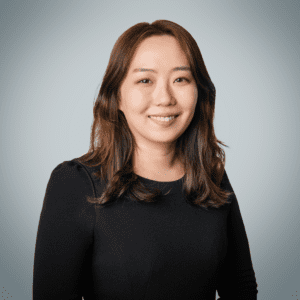
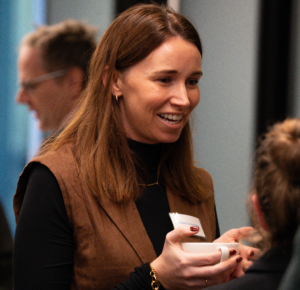
At Wachsman, our greatest edge has always been our people: the strategic minds who pair deep sector expertise with the human intuition required to lead in a rapidly shifting global landscape. In the second installment of our Beyond the Brief series, we sit down with Louise Creedon, Director and Head of London.

Louise’s career is defined by her ability to thrive in high-stakes environments. From navigating the fast-paced communications engine at Ryanair to her five years as Media Manager for Connacht Rugby – a role that took her from the sidelines in Galway to the sub-zero temperatures of Siberia – she learned early on that success is built on the strength of your relationships.

In 2022, Louise made the leap from Wachsman’s EMEA headquarters in Dublin across the water to London to establish Wachsman’s UK presence. What began as a solo mission has, over the last four years, steadily evolved into a robust 16-person team. In this conversation, Louise discusses the collision of traditional and digital finance, why earned media is the not-so-secret weapon for visibility in an AI-driven search landscape, and the lessons learned while scaling an office from the ground up.


Louise, tell us – where did you grow up and what do you think that environment gave you?

I was born and raised in Dublin, but my parents moved to the ‘big city’ from the Irish countryside and both came from large Irish families. Spending childhood summers running around fields and farms with my many cousins gave me a deep-rooted sense of family and community. Now living and working in a fast-paced city like London, I’ve realised that I still seek out that sense of connection. Thankfully I’ve found it here too.  

What did you want to be when you were younger and what influenced that?

I thought I’d be a teacher. Between years of babysitting and a genuine love for looking after children, it felt like a natural path. Even now, I still believe it must be one of the most rewarding vocations. The ability to have a positive, lasting impact on someone’s life at such a foundational stage is incredibly powerful.

What is the most unusual job or experience you had before Wachsman and what did it teach you?

I was the Media Manager for professional rugby side Connacht Rugby in Ireland for five years which included traveling to different parts of Europe every other weekend as the only female in a 30-man squad and backroom team. We made one very memorable trip to Krasnoyarsk in Siberia to play Russian side Enisei-STM in minus 26 degrees celcius – one of the most unusual but interesting moments of my career liaising with translators and Russian sports media. 

While it’s cliché to say that sport replicates the many highs and lows of life, I learnt so much from that professional sports environment, witnessing first hand the work that goes into building relationships behind the scenes before you can even think about performance on the pitch. 

I recall reading a newspaper column by former Irish international rugby player and now coach Ronan O’Gara that said: 

“In any professional entity, there are essentially three groups. The core group who believes in the project, a second group which doesn’t always play or feel involved, but ultimately sail or sink the vessel. And the third cohort, invariably disaffected by lack of game time or relationship with the manager, are disruptive and do everything they can to influence the middle tier in a negative way. Their glass is half empty on the way to empty. The key is to pull the middle group towards the doers and away from the moaners. You need that group, otherwise, it’s all uphill.”

O’Gara’s point was that the key to leadership is pulling that middle group toward the doers and away from the moaners. It’s a direct, perhaps slightly controversial take, but it is spot on regarding the challenges of running a high-performing team. Our goal is always to ensure we’re building a culture where that positive momentum is the only direction of travel. Thankfully, we’ve managed to build a team at Wachsman where everyone is pulling in the same direction.

What did you learn about yourself early in your career that you still rely on today?

I learned very early on that relationships are your greatest currency. Being able to work effectively with others will almost always serve you better than technical knowledge alone. 

What first drew you to Wachsman and what made you feel this was the right place?

After seven years in-house, I wanted to experience agency life, but the traditional models and opportunities in Dublin at the time just didn’t appeal to me. When I chatted with Liam Murphy (now Wachsman President), I was excited by the ambition of what Wachsman were building, even though it was in an industry I knew absolutely nothing about at the time. Leaving the stability of in-house for the unknown felt like a bit of a risk but I told myself, ‘I’ll give it at least a year.’ More than seven years later, I’m still at Wachsman, which I think says everything about the culture and opportunities here. 

When you look across regions, where do you think Wachsman has a real edge right now?

Beyond our decade of history, our real edge is that we are truly global. Having been in this industry for seven years, it’s fascinating to watch the collision of traditional finance and digital assets play out differently in every market. We see the ‘momentum pendulum’ swing between regions – from the US to the UK and Europe, APAC, and the Middle East – often driven by shifting regulations and geopolitics. Because we are on the ground in all of these hubs, we are uniquely positioned to help our clients navigate that collision in real-time. In an increasingly digital world, being able to meet clients and media in person to build genuine, face-to-face relationships remains a cornerstone of how we do that.

What is the biggest opportunity for Wachsman in 2026?

AI continues to dominate the headlines, but the real opportunity lies in how we upskill strategically to guide our clients through this new media era. We are moving toward a world where users ask their LLM of choice for advice rather than just scrolling through Google search results. In this landscape, earned coverage and PR conducted with integrity are more critical than ever. If your company isn’t being discussed with authority in the right places, it won’t be picked up by these models. Essentially, if you’re not showing up there, you’re invisible.

What is a common misunderstanding clients have about the value of PR and strategic counsel?

There is often an outsized focus on ‘tier 1’ outlets like Bloomberg or the Financial Times as the only meaningful benchmarks for success. While these are, of course, prestigious, high-signal platforms, our role is to help clients take a step back and ask: Why? We have to ensure that the desire for a specific outlet aligns with where their target audience actually lives. If you focus solely on the ‘big names,’ you risk missing the specialised spaces where your most important stakeholders are actually looking for information. Strategic counsel is about being impactful where it matters most, rather than just being loud in the most obvious places.

Inspirational

What is a book, idea or conversation that has shaped how you think about leadership or life?

A simple message I read in a newsletter from James Clear (who wrote the book Atomic Habits) resonated with me in terms of the type of characteristics that make a good leader and colleague:

Being good at what you do is partially about competence, but not exclusively.

Two other things that matter:

Reliability. You do what you say you’re going to do-on time and as expected.

Enthusiasm. You’re excited to be here and eager to work on this problem.

Skills matter, but in many cases it’s your reliability or attitude that separates you from the pack.

What is something you have changed your mind about over the last few years?

I used to believe that success meant managing to keep everyone on your team happy at all times. I’ve realised that’s an impossible – and perhaps even counterproductive – metric. We are all human, each with different motivations and personal challenges. Now, I believe success is about staying true to yourself and working hard to build a supportive, empathetic environment of mutual respect. If you get the culture right, happiness usually follows, but the focus has to be on respect first.

What is something you are grateful you learned early rather than later?

It’s a bit of a cliché, but I’m grateful I learned early on that people will rarely remember the exact words you said, but they will always remember how you made them feel. In communications, we spend so much time obsessing over the ‘perfect’ message, but the delivery and the authenticity behind that message are what actually build long-term trust.