Beyond the Brief: Pranav Rastogi, Executive Director, Head of Singapore
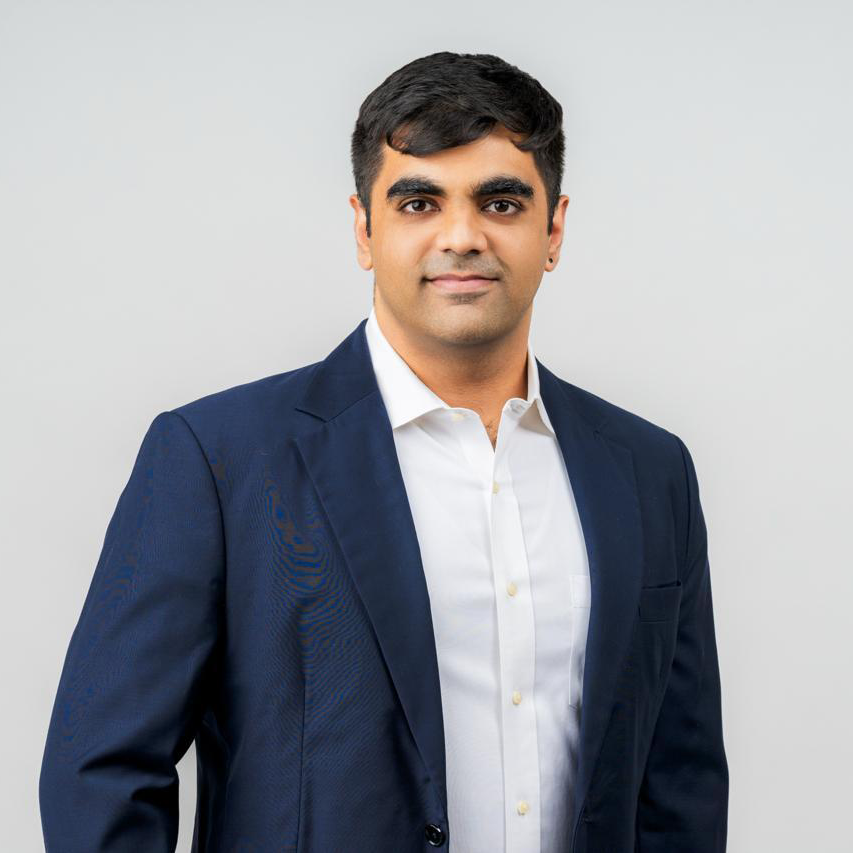
At Wachsman, our greatest asset has always been our people: the strategic minds, the sector experts, and the creative problem-solvers who navigate the complexities of a rapidly evolving global landscape. As we look toward the future of elite advisory and the collision of traditional finance with digital assets, we are taking a look behind the scenes with the leaders and innovators shaping our agency. Through candid conversations, we’ll explore the personal journeys, leadership philosophies, and bold ambitions that define the Wachsman team and the impact we strive to make for our clients worldwide.
In the latest installment of Beyond the Brief, we sit down with Pranav Rastogi, Wachsman’s Executive Director, Head of Singapore, and explore how a life across countries and cultures has shaped his approach to communications and leadership. From helping launch a university to navigating APAC’s diverse markets, Pranav reflects on building trust, understanding different perspectives, and the relationships that make good work possible.
Pranav, tell us – where did you grow up and what do you think that environment gave you?
I’ve moved countries roughly every four to five years. I was born in New Delhi, moved to Dubai when I was a few months old, Kuala Lumpur when I was 12, and the UK at 17. After that came Kuala Lumpur, New Delhi, Singapore, Washington D.C., and eventually Singapore again.
One of the most formative changes was moving from the Indian school system in Dubai to an international school in Kuala Lumpur. It completely opened my horizons and changed how I thought about learning. My experience of education became much broader than studying and doing well in exams. There was so much to get involved in beyond the classroom, through extracurricular activities and opportunities to explore different interests. I became much more curious about the world, more willing to try new things, and more interested in discovering what I cared about rather than just what I was good at academically.
Being surrounded by people from different countries, cultures, and backgrounds added another dimension to that. At an age when you’re still forming your understanding of the world, you start to realize that your own experience is only one small part of it.
I think that combination of moving countries made me comfortable stepping into unfamiliar situations. It also made me more patient and better at putting myself in other people’s shoes.
What did you want to be when you were younger and what influenced that?
I studied Economics and wanted to work in that field. I remember being fascinated by economic theory in high school. My teacher described economics as “the study of human behaviour” and that stayed with me. It offered a way to understand how people make decisions and why the world works the way it does.
I became particularly interested in behavioural economics and the social and political dimensions: how people actually behave, rather than how models assume they will, and how their choices are shaped by their experiences, beliefs and the people around them. Political Economy appealed to me for similar reasons: it brought in questions about power, institutions and competing interests – who gets to shape decisions, whose priorities are reflected in them, and who ultimately benefits.
Looking back, communications wasn’t as much of a departure as it might seem. Much of what I do today involves understanding what motivates people, how their views are formed, and why the same issue can mean very different things to different audiences.
What is the most unusual job or experience you had before Wachsman and what did it teach you?
I had the opportunity to be part of the team that launched a university. On one of my first visits to the campus, I was handed a hard hat because it was still a construction site!
We were creating a brand from scratch, but we were also helping define an experience that would shape several years of students’ lives. We were asking students and parents to trust that the institution we were describing would become a reality.
It taught me a great deal about building trust and the relationship between a promise and its delivery.
What did you learn about yourself early in your career that you still rely on today?
I learned that I enjoy being thrown into unfamiliar territory. Moving between countries and working across different sectors meant I couldn’t always rely on having done something before. I had to get comfortable asking questions, learning quickly and working out where I could contribute.
What first drew you to Wachsman and what made you feel this was the right place?
Whenever I consider a role, I look at three things: the opportunity, the chance to grow, and the people. Wachsman ticked all three boxes.
The opportunity to build on a strong platform and help shape the next phase of the business was exciting. The people were just as important. I spoke to a number of colleagues during the interview process, and what struck me was how consistent they were, not just in what they said made Wachsman a great place to work, but also in how openly they spoke about the challenges. That honesty gave me a lot of confidence in the culture.
That has probably been what has stood out most since joining. My colleagues are one of the best parts of coming to work every day. They are smart, thoughtful, ambitious, and incredibly supportive of one another. There is a real sense that people want each other to do well, and that makes a huge difference.
You have a senior role in our APAC hub in Singapore – what makes doing PR in this part of the world different to the US, for example?
The biggest difference is that APAC isn’t one market. It’s an enormous region encompassing very different languages, cultures, regulatory environments, and media landscapes. The US certainly isn’t uniform either, but an APAC remit means navigating differences across national borders as a matter of course.
A story that works in Singapore might need a completely different approach in Japan, Indonesia, or India, or might not be relevant there at all. Even the assumptions behind a message can change from market to market.
I’m always cautious when someone talks about “doing APAC communications” as though it’s a single activity. You need to establish which markets matter, who you’re trying to reach, and why those audiences should care.
A regional strategy is valuable, but it has to leave room for local judgment. Adapting a narrative means more than translating the words; it often means changing the emphasis, the evidence, or the entire starting point.
When you look across regions, where do you think Wachsman has a real edge right now?
The combination of specialist knowledge and perspectives across regions. We understand the businesses and technologies our clients are working with, but we also understand the questions they’re likely to face from people outside their immediate industry.
That matters particularly where traditional finance and digital assets meet. You need to be able to speak credibly to people who come to the conversation with very different levels of knowledge, expectations and concerns.
Having colleagues across the US, Europe and Asia adds another dimension to that judgment. We can bring different perspectives into work, rather than assuming that what works in one market will work everywhere. Our edge is connecting those perspectives and turning them into practical counsel.
What is the biggest opportunity for Wachsman in the coming year?
I think the biggest opportunity is to bring our specialist expertise into a broader set of business conversations. Our knowledge of finance, digital assets and emerging technology is valuable well before a company has an announcement to make.
When a business is entering a market, introducing a new proposition or trying to reach a different audience, there are important questions about credibility, trust and stakeholder expectations. Communications should help inform those decisions, rather than only explain them afterward.
We already do that work, and I see a real opportunity to deepen it—with existing clients as well as organisations that might not immediately think of Wachsman as a partner.
What is a common misunderstanding clients have about the value of PR and strategic counsel?
That the value is primarily in the coverage. Coverage matters, of course, but it’s an output. The more important question is what you’re trying to achieve through it.
Are you helping potential customers understand your business? Building credibility with partners? Changing an outdated perception? You can generate a lot of attention without making much progress on any of those things.
The other misconception is that our role begins once the business has decided what it wants to say. The most valuable work happens before that: challenging an assumption, identifying a gap between the message and the reality, or helping a leadership team understand how a decision could be received.
Inspirational
What is a book, idea or conversation that has shaped how you think about leadership or life?
One of my all-time favourite works is Liu Cixin’s Remembrance of Earth’s Past trilogy. What I love about it is the scale of the thinking. It constantly forces you to zoom out: from individuals, to societies, to civilisations, and eventually to questions that play out over centuries.
What stayed with me most is how differently people respond to uncertainty. Throughout the trilogy, people make decisions with incomplete information, often under enormous pressure, and those choices can have consequences far beyond anything they could have anticipated. It is a reminder that decisions that look rational in one moment can appear completely different when you change the time horizon or the perspective from which you view them.
I also found the trilogy fascinating because it challenges the assumption that everyone will respond to the same circumstances in the same way. People are shaped by their experiences, incentives, fears and beliefs, and that can lead them to very different conclusions even when they are looking at the same facts.
That idea has stayed with me beyond the books. In both leadership and life, I try to remember that the perspective you are seeing is rarely the whole picture. It has made me more interested in asking what I might be missing, thinking about the longer-term consequences of decisions, and understanding why someone else might see the same situation very differently.
What is something you have changed your mind about over the last few years?
I’ve become more deliberate about what I mean by growth. Earlier in my career, it was easy to focus on the most visible measures: more clients, a bigger team, additional markets.
I’m more interested now in whether growth is making the organization stronger. Are we developing people? Are we doing work where we can make a meaningful difference? Are we building something that can perform consistently, rather than relying on everyone continually stretching themselves?
That has also made me appreciate the importance of choosing what not to pursue. An opportunity can be attractive without being the right opportunity for the business at that moment.
I’m still ambitious about growth. I just think more carefully about what sits underneath it and whether we’re building the foundations to sustain it.
What is something you are grateful you learned early rather than later?
How you treat people matters long after a particular project or job has ended.
Roles change, businesses change, and people move on, but they tend to remember whether you listened, whether you were fair, and whether you followed through on what you said you would do. I don’t think that means always being agreeable. You can disagree, give difficult feedback or make a decision someone doesn’t like and still treat them with respect. In fact, those are often the moments when it matters most.
I’m grateful I learned that relationships aren’t separate from doing good work; they’re a big part of what makes good work possible. And beyond the professional benefits, it simply makes for a better way to live.